
IFZA license cost in UAE starts from AED 12,900 for a zero-visa package in 2026.…

Is Audit Mandatory in UAE? Complete Guide for Mainland and Free Zone Companies
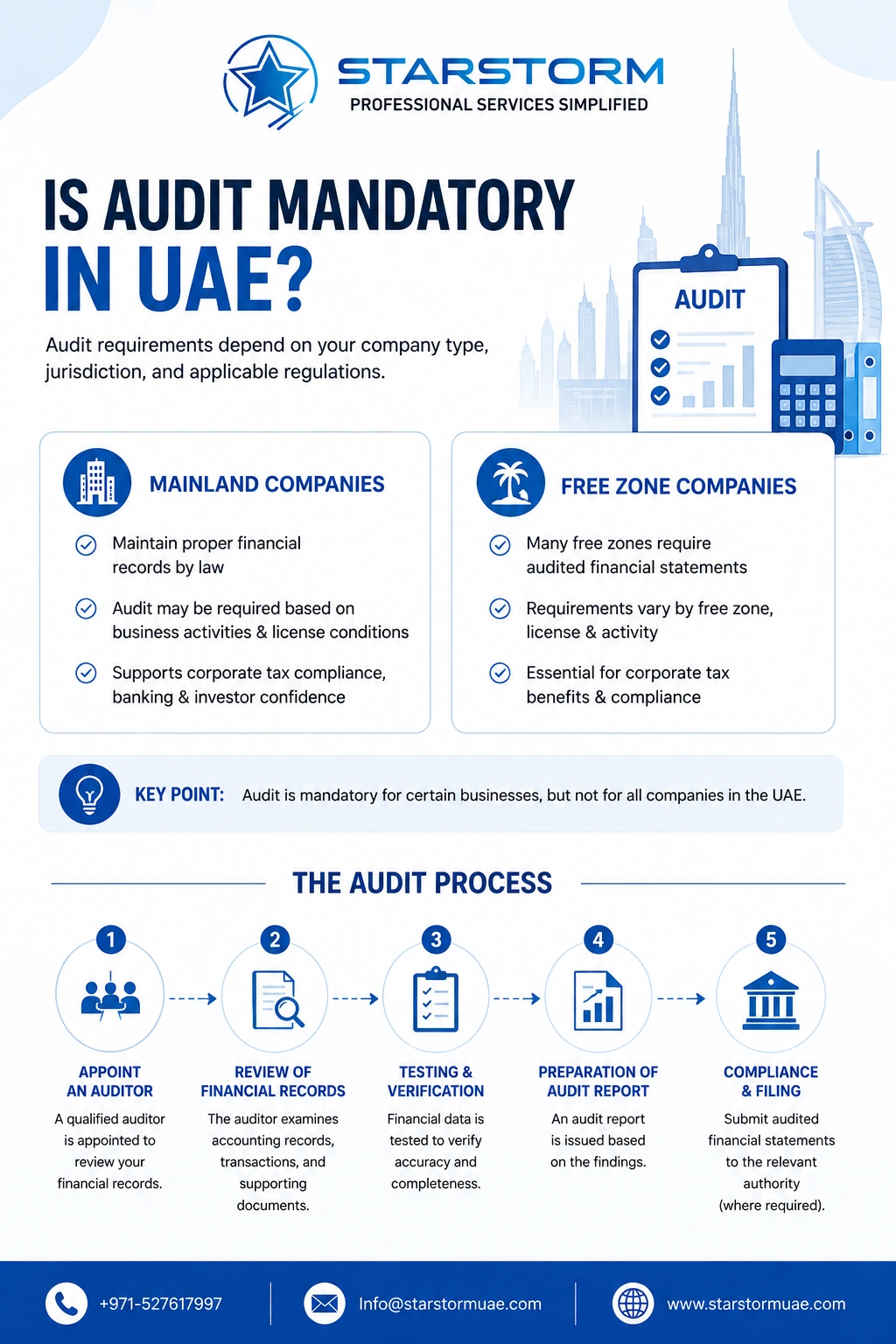
Is Audit Mandatory in UAE? The simple answer is: audit requirements in the UAE depend on the type of company, its jurisdiction, and applicable regulations. While an audit is not mandatory for every business, many companies operating in the UAE, especially free zone entities and regulated businesses, must maintain proper accounting records and may need audited financial statements to meet compliance requirements.
As the UAE strengthens its corporate tax framework, businesses increasingly need clarity on audit obligations, financial reporting, and tax compliance. Understanding whether your company requires an audit can help avoid penalties and support smooth business operations.
What Is an Audit and Why Does It Matter in the UAE?
An audit is an independent examination of a company’s financial records, transactions, and accounting practices. The purpose is to verify that the company’s financial statements accurately reflect its financial position.
A statutory audit helps businesses:
- Improve financial transparency
- Support corporate tax compliance
- Strengthen investor confidence
- Meet free zone authority requirements
- Prepare for potential tax audit reviews
For many UAE companies, audited financial statements are an important part of demonstrating compliance with legal and regulatory obligations.
Is Audit Mandatory in UAE?
The answer depends on where the business is established and the rules governing its operations.
Some companies established in the UAE may be required to prepare audited financial statements, while others may only be advised to maintain accurate accounting records. Certain free zone authorities require companies to submit audited financial statements annually.
For mainland companies, audit obligations can vary depending on business activities, licensing conditions, and regulatory requirements.
Therefore, an audit is mandatory for certain businesses, but it is not necessarily mandatory for all companies operating in the UAE.
What Are the Audit Requirements for UAE Mainland Companies?
Companies established in the UAE mainland are generally required to maintain proper financial records under applicable companies law provisions.
The UAE Commercial Companies Law emphasizes sound accounting practices and record keeping. While specific audit requirements may vary, many mainland companies choose to prepare audited financial statements to support tax filing, banking relationships, and compliance with regulatory obligations.
Mainland companies also benefit from maintaining reliable financial reporting systems, especially under the UAE corporate tax framework.
What Are the Audit Requirements for Free Zone Companies?
Free zone companies are often subject to specific rules established by their respective free zone authorities.
In many jurisdictions, free zone companies are required to maintain audited financial statements and submit them to the relevant free zone authority. Examples include certain entities registered in Dubai-based free zones and other regulated jurisdictions.
Requirements for free zone companies may differ based on:
- Business activity
- Licensing conditions
- Regulatory framework
- Reporting obligations
A qualifying free zone person seeking corporate tax benefits should pay particular attention to documentation and compliance requirements.
How Does UAE Corporate Tax Affect Audit Requirements?
The introduction of UAE corporate tax has increased the importance of accurate accounting and financial record maintenance.
Under the UAE corporate tax law, businesses must maintain records that support their tax position and corporate tax filing obligations. While audited financial statements may not always be mandatory, they often help businesses demonstrate compliance and support accurate tax calculations.
The Federal Tax Authority expects businesses to maintain sufficient documentation throughout each tax period. Proper accounting records and audit reports can help organizations respond efficiently to compliance reviews and tax-related inquiries.
For businesses seeking qualifying free zone benefits, maintaining strong financial documentation is especially important for corporate tax purposes.
What Is the Audit Process in the UAE?
Although the audit process may vary depending on the company and industry, it generally follows these steps:
1. Appointment of an Auditor
A qualified auditor reviews the company’s financial information and compliance practices.
2. Review of Financial Records
The auditor examines accounting records, transactions, and supporting documentation.
3. Testing and Verification
Financial data is tested to verify accuracy and completeness.
4. Preparation of Audit Report
An audit report is issued based on the findings.
5. Compliance and Filing
Where required, businesses submit audited financial statements to the relevant authority.
When Should Businesses Prepare Audited Financial Statements?
Businesses should consider preparing audited financial statements when:
- Required by free zone authorities
- Seeking financing from banks
- Attracting investors
- Supporting corporate tax compliance
- Maintaining strong governance practices
Even where not expressly required, many businesses choose to maintain audited financial statements to improve transparency and reduce compliance risks.
our specialists help businesses stay compliant and prepared for regulatory requirements.
Why Choose Starstorm UAE For Audit Services in Dubai?
As a DMCC-approved auditor in Dubai, Starstorm UAE combines expertise in business setup, tax advisory, accounting, and audit support.
We help businesses:
- Understand audit obligations
- Maintain accurate financial records
- Prepare audit reports
- Manage corporate tax compliance
- Meet free zone and mainland requirements
Businesses seeking guidance on Tax and Audit Services in Dubai can benefit from a proactive approach that reduces risk and supports long-term growth.
Key Takeaways
- Audit requirements in the UAE vary by jurisdiction and business type.
- Free zone companies often face specific audit requirements.
- Mainland companies should maintain proper accounting records and financial documentation.
- UAE corporate tax has increased the importance of accurate financial reporting.
- Audited financial statements can strengthen compliance, transparency, and business credibility.
- Professional guidance helps businesses meet evolving regulatory obligations.
Frequently Asked Questions
Is audit mandatory for all companies in the UAE?
No. Audit requirements vary depending on the company structure, regulatory framework, and jurisdiction. Some businesses must maintain audited financial statements, while others may not have a mandatory audit obligation.
What is the turnover limit for audit in UAE?
There is no universal turnover threshold that applies to all businesses. Audit requirements are generally determined by applicable regulations, licensing authorities, and business activities.
What is the audit checklist for UAE?
A typical audit checklist includes financial records, accounting documents, bank statements, invoices, contracts, tax documentation, and supporting evidence for transactions.
What is auditing in the UAE?
Auditing is the independent review of a company’s financial records and statements to verify accuracy, compliance, and financial integrity.
Is audit mandatory for freezone companies in the UAE?
Many free zone companies are required to maintain or submit audited financial statements, depending on the rules of the relevant free zone authority.
Is it compulsory to do an audit?
Not always. Whether an audit is compulsory depends on the company’s jurisdiction, regulatory requirements, and specific compliance obligations.
Related Posts